How to Detect AI Agents Visiting Your Website
Combine identity, network, browser, and behavior signals to spot AI agents.

To detect AI agents visiting your website, use user-agent inspection and IP verification along with browser and device checks and behavioral analysis. No single signal catches the full population, and a declared bot name is not proof of identity. The purpose is to distinguish training crawlers, retrieval bots, and user-triggered agents so that content protection does not come at the expense of AI search visibility.
Why AI agent detection now requires more than a single signal
A site owner can block known crawler names and still take the AI traffic that gets through for human visits. The apparent success reflects the limits of the check. Some agents announce themselves, others omit an identifiable user-agent, and stealth browsers imitate ordinary sessions.
Training crawlers collect content in bulk, retrieval bots build indexes for cited answers, and user-triggered fetchers request pages on a person's behalf. Treating those visits as one category produces both missed detections and inappropriate blocks. The growing long tail of agents outside the top nine in Q3 2026 also means that a short list of familiar names covers less of the traffic a site receives.
Google Analytics excludes known bot crawlers rather than exposing their requests, while human referrals from AI platforms are a different measurement. Maverick Intelligence reports which AI agents visit, what content they consume, and who operates them.
The four signal layers that together cover the full agent population
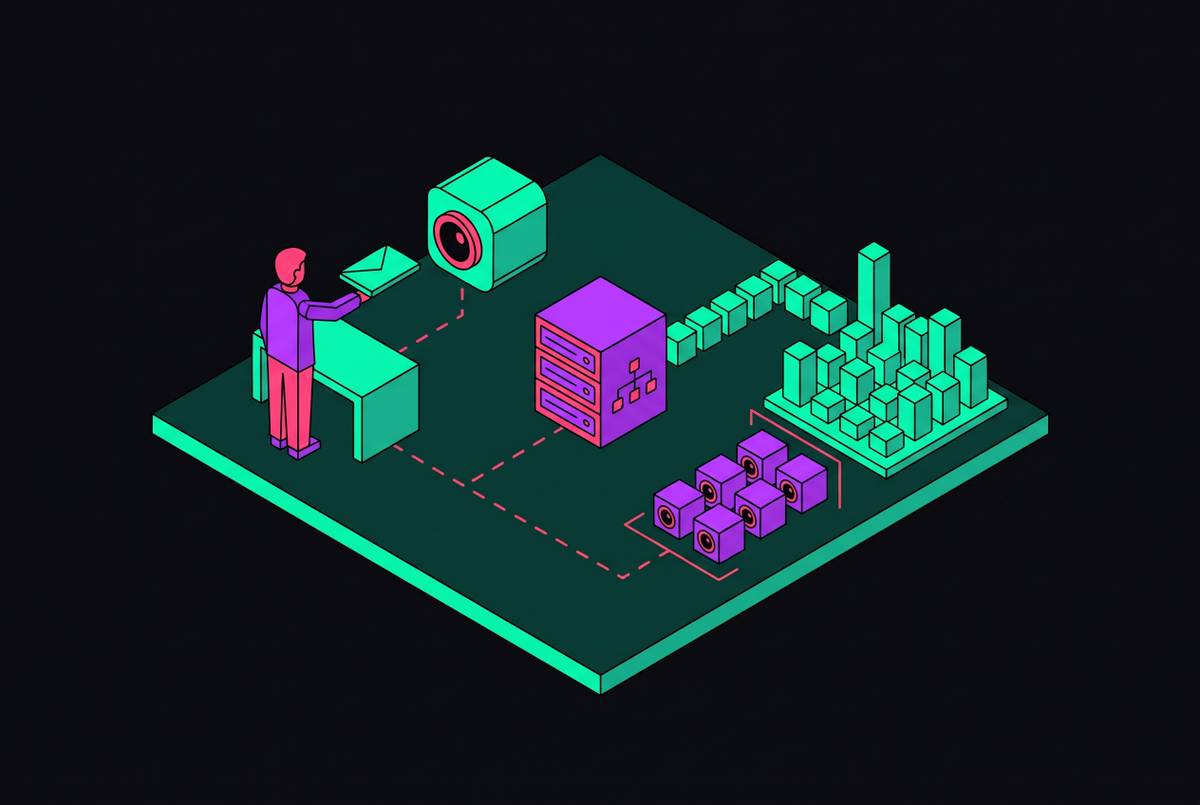
Reliable detection combines four independent layers, namely identity, network, browser/device, and behavioral signals. Identity checks ask what the request claims to be. Network checks ask whether where the request comes from and how it connects back up that claim. Browser and device checks test whether the parts of the session's environment fit together, and behavioral checks look at how it acts.
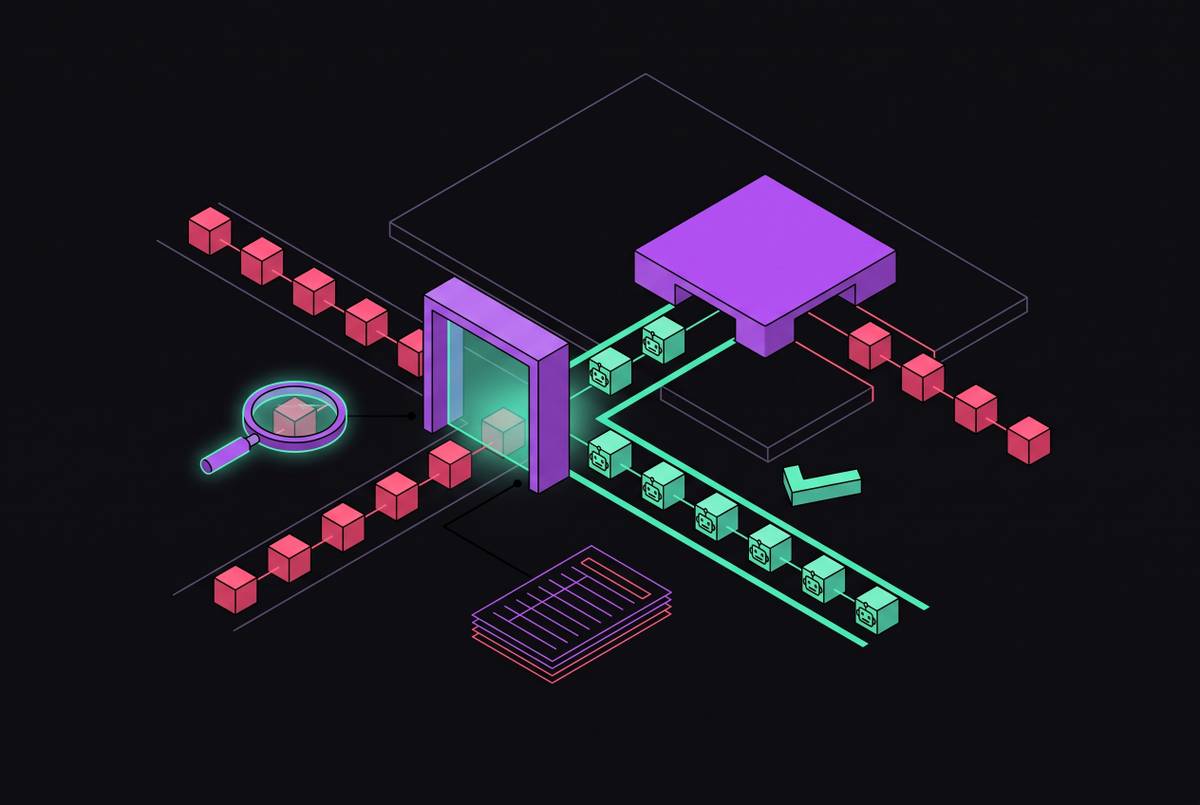
A crawler can change its name without changing its infrastructure, while a stealth browser can use a residential connection without reproducing human input. Platforms that combine these dimensions can assess the same request across all four. That is the relevant standard for evaluating a visitor intelligence solution such as Maverick Intelligence.
The value lies in contradictions as much as individual detections. A session may claim to use one operating system while its rendering stack looks like that of another. The more attributes an agent spoofs, the more chances there are for them to disagree, so the key test is whether they all fit together.
Reading user-agent strings: which agents self-identify and how to verify them
User-agent inspection is the fastest entry point for cooperative agents. A short filter such as grep -E 'OAI-SearchBot|ChatGPT-User|ClaudeBot' access.log can pick out known names in an access log. A matching name must be checked against the requesting IP before the request can be trusted to come from that operator.
OpenAI publishes separate IP files for OAI-SearchBot, its retrieval bot, and ChatGPT-User, its user-triggered agent. Anthropic publishes a bot IP file covering ClaudeBot, Claude-User, and Claude-SearchBot. PerplexityBot also has a published IP file, while Amazonbot can be checked against Amazon's published ranges. These checks distinguish a recognizable header from a request that actually comes from the named operator.
For DNS-based verification, Bingbot uses forward-confirmed reverse DNS matching *.search.msn.com. The reverse lookup must identify the expected operator, and the forward lookup must resolve back to the requesting IP. Requests that fail identity verification remain unverified regardless of their names. User-agent filtering in logs or a WAF rule catches the cooperative majority, but identity reporting in Maverick Intelligence or another visitor intelligence solution must be read in the context of network and behavioral evidence.
IP range verification and ASN analysis for agents that drop their user-agent
When an agent drops its identifiable user-agent, the network layer supplies evidence the header no longer provides. IP range matching can associate a request with published operator infrastructure. ASN classification distinguishes datacenter networks from residential and mobile ranges. A datacenter session with no declared bot identity is a strong automation signal, though it does not by itself establish which AI agent is responsible.
TLS fingerprints add a separate check on the connection. JA3 and successor fingerprints identify characteristics of the TLS client library, which can differ from those of the browser named in the header. Geographic consistency checks can also reveal a mismatch between a declared location and the IP's location or ASN. Cloudflare Bot Management implements edge-level classification using bot scores and JA3 fingerprints.
Network verification still has limits. Bytespider and Meta-ExternalAgent publish no IP ranges, making their claimed identities harder to authenticate through this layer alone. Residential proxies and cloud browsers further weaken the assumption that automation must originate from obvious crawler infrastructure. Those gaps make session-level evidence necessary.
Browser and device signals that separate headless automation from real sessions
A stealth browser can arrive from a clean residential IP and present no declared bot identity. Browser and device checks address that case by testing whether its JavaScript environment, rendering stack, and reported hardware agree. The claimed device must plausibly produce the complete set of observations.
Chrome DevTools Protocol traces can expose programmatic browser control. The obvious example is navigator.webdriver, although stealth frameworks can patch it. Other evidence includes automation-only properties in the window object and the absence of extension artifacts associated with genuine user profiles. These signals need to be combined to assess an AI visit.
Rendering checks extend the consistency test. A session claiming macOS Chrome but returning Mesa/llvmpipe WebGL strings presents a concrete contradiction, while Canvas and Audio API outputs can distinguish virtual environments from physical hardware. Screen resolution, device pixel ratio, CPU cores, and reported memory should also form a plausible profile. Playwright and Puppeteer with stealth plugins can patch individual attributes, but making every attribute agree is harder than hiding one flag.
Behavioral signals that catch agents no static check reaches
A browser may render normally while reading content or filling fields through programmatic DOM calls. Such a session can generate plausible navigation without the continuous input that accompanies human interaction.
A paper accepted at the North East AI Agents Day 2026 workshop found that machine-learning classifiers detected agents through “coincidental features”. Automation can reveal itself through events it never generates, including missing scroll events, absent raw mousemove streams, and empty wheeldelta series.
Human mouse movement is noisy, scroll pauses vary with content, and form interaction includes corrections and uneven keystroke timing. Automation may instead jump between coordinates, scroll to exact offsets, or set field values without keystrokes. Agentic browsing can click and move between pages without the idle micro-movements and reading-pace pauses that people make. These observations should contribute to a confidence score with the upstream layers, because no single behavioral anomaly warrants a block.
How the agent type — training, retrieval, or user-triggered — determines the right response
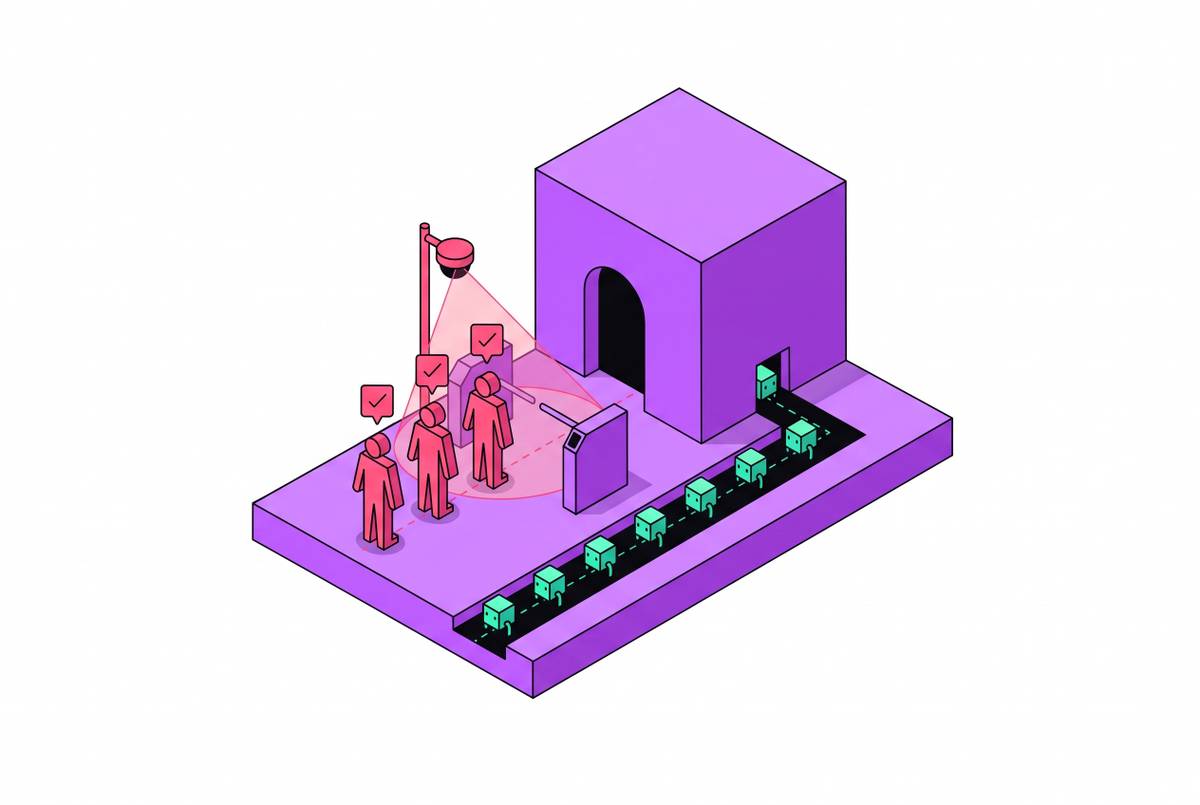
Once a request is classified, its purpose determines the default response. Training crawlers such as GPTBot, ClaudeBot, Meta-ExternalAgent, Bytespider, CCBot, and Amazonbot collect material for model training. Where content protection or licensing concerns apply, the recommended default is to block them through robots.txt, backed by enforcement where needed. That choice targets future training access.
Retrieval bots serve a different function. OAI-SearchBot, Claude-SearchBot, PerplexityBot, Amzn-SearchBot, and Bingbot build indexes used to find material for answers. Allowing them by default preserves that route to visibility. User-triggered fetchers, including ChatGPT-User, Claude-User, Perplexity-User, and Meta-ExternalFetcher, also merit access because a person has requested the page through an assistant.
Spoofed or unverified identities warrant a challenge or rate limit. Multi-step agentic browsers require an intent-based response, with documentation reading presenting a different risk from form submissions or access to authenticated endpoints. A blanket block discards these distinctions and can suppress useful traffic without addressing the specific activity that concerns the site owner.
What robots.txt can and cannot enforce, and where it fails against non-compliant agents
Robots.txt is a declaration of policy. It works well for cooperative crawlers whose documented behavior respects its directives. Checking a request against the operator's infrastructure helps show that it comes from the crawler covered by that policy. The file is therefore useful, but its authority depends on compliance.
Google-Extended and Applebot-Extended are training opt-out tokens. Conversely, Cloudflare's registry includes 28 agents that send no user-agent string, leaving no declared name for an agent-specific directive to match. Interactive agentic browsing is also outside the scheduled-crawler model that robots.txt was designed to address.
DataDome's research found that what bots claimed about following the rules differed from what they did. Bytespider has a persistent reputation for ignoring directives, and Perplexity's compliance is contested. User-triggered fetchers occupy a further grey zone because a supplied URL may be fetched despite a directive that would otherwise block it. These limits call for enforcement beyond the file.
Server-side and CDN-level enforcement that robots.txt cannot provide
Active enforcement intercepts requests at the server or CDN edge. Access logs provide the starting evidence, recording requests that reach the relevant server or edge. GoAccess, AWStats, and custom scripts can expose agent strings and the paths requested. That view connects a suspected identity to the content and endpoints it actually accesses.
WAF rules can combine user-agent matching with published IP ranges. For example, a rule can reject requests claiming GPTBot when they originate outside OpenAI's published ranges, while allowing authenticated crawling where policy permits. ASN-based rate limits address high-volume datacenter traffic against content endpoints without corresponding session depth. CAPTCHA or JavaScript challenges provide another control for unverified requests, although cooperative bots may fail the challenge and stop.
Protection should also vary by endpoint. DataDome's 2025 Global Bot Security Report found that AI bots often target forms, login pages, and checkout flows, which need tighter controls than general content pages.
What tools can identify ChatGPT or Claude visiting a website
With Apache, Nginx, and CDN edge logs, technical teams own the records they work from. GoAccess, AWStats, and custom scripts can make useful reports from those records without the need for a separate visitor intelligence platform. The tradeoff is the engineering time needed for agent classification, dashboards, and alerts.
Cloudflare Bot Management fits sites that want classification at the edge. It uses bot scores and connection fingerprints to support request-level decisions. Cloudflare's documentation lists granular bot scores and JA3/JA4 fingerprint access as Enterprise features, so teams need to check which plans have the signals they need. Basic bot visibility is not equivalent to the full detection feature set.
Maverick Intelligence combines AI agent reporting with person-level human visitor identification. It reports agents including ChatGPT, Claude, and thousands of crawlers, the content they consume, and who operates them. It also identifies human visitors and delivers signals through Slack, HubSpot, Salesforce, and webhooks. For B2B teams, that combination addresses a distinct requirement, separating agent activity from the human sessions used for pipeline intelligence.
Turning AI agent detection data into decisions: what to do once you can see what is visiting
Use detection data to assign content-specific controls. Proprietary pricing information, gated research, and original data warrant training-crawler restrictions through robots.txt and IP-range WAF rules. General content and documentation benefit from access by retrieval and user-triggered agents. The decision should reflect both the value of protecting the material and the visibility lost by withholding it.
Next, check the requested paths to find pages that crawlers miss. Pages that retrieval bots do not visit lack that route into AI answers, regardless of their content quality. Tracking retrieval traffic over time provides a leading indicator of citation potential and shows whether content changes affect crawl interest. A crawl provides useful evidence before citation data becomes available.
For B2B pipeline reporting, exclude agent sessions from the human identification pool and assess the remaining visits for actionable leads. Person-level details and real-time alerts are useful only when the session represents a person. Finally, keep crawler identities, IP ranges, and detection rules up to date as the mix of agents changes. AI agent detection is an ongoing classification task that continues after installation.