How AI Assistants Acting on Behalf of Users Show Up in Your Traffic Data
AI agents running tasks for users leave different footprints than traditional crawlers.
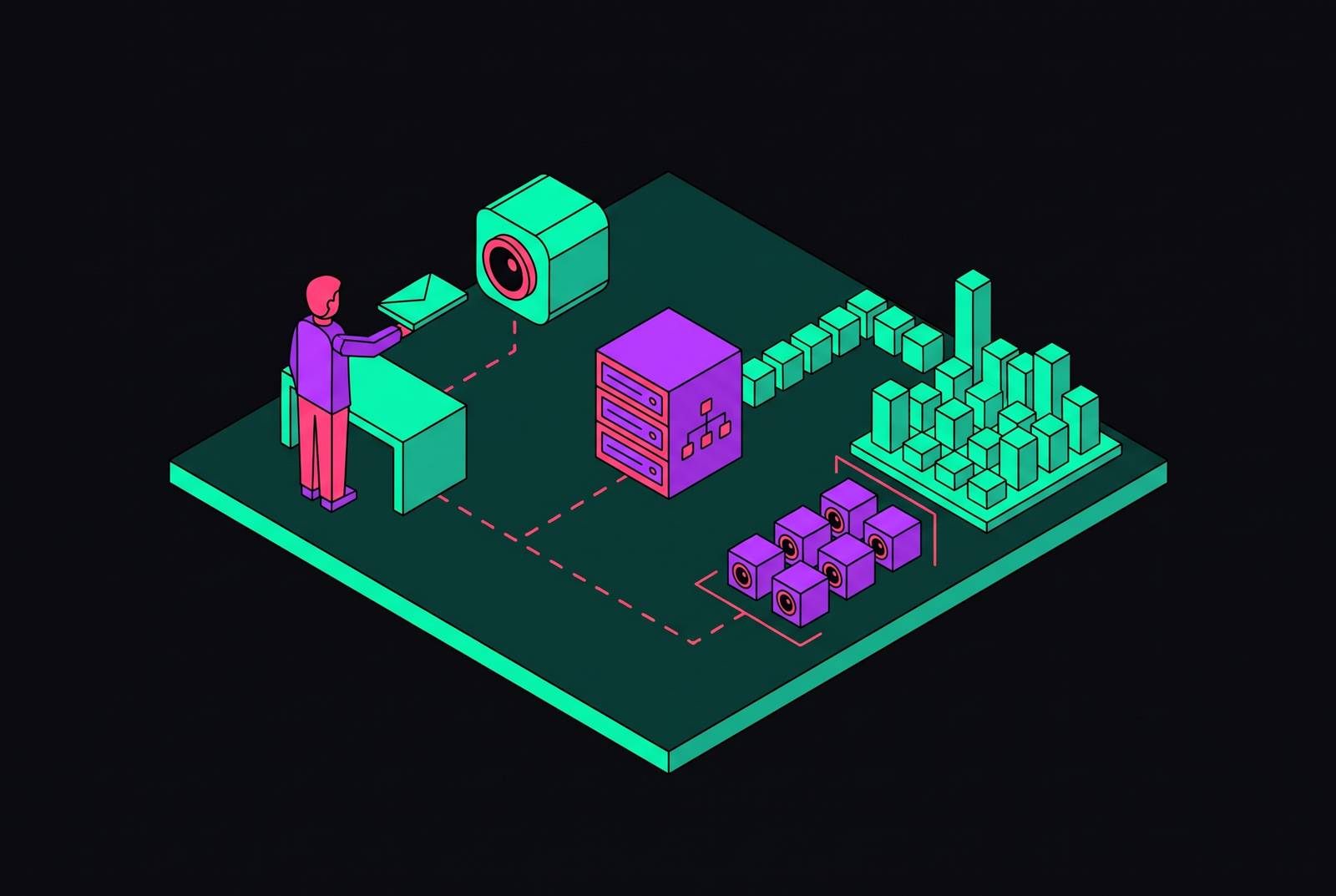
To find AI agents on a website, use server logs or CDN-level data to find requests, then check whether the bots are who they claim to be against operators’ published IP ranges. JavaScript analytics alone miss most of this activity. Crawlers collect content, while agents do tasks for real users, so an automated visit can be a buyer doing research through an agent.
Why agentic AI traffic is different from the crawlers that came before it
“AI traffic” groups together two populations with different purposes. Training crawlers collect content for automated systems, while agentic browsers and general-purpose AI agents browse in real time on a specific user’s behalf. They follow links, read product pages, compare options and sometimes fill forms to complete a delegated research or purchasing task. The initiating person is the key distinction. A machine makes the request in both cases, but only one represents a user asking for work to be done.
That distinction changes what a visit means. A training crawler reading a product page and an agent comparing that product for a prospective buyer may consume the same content, yet they represent different relationships with the site. Treating both as generic bot activity erases the user’s role in the second visit. For analytics, the useful question is therefore who initiated the activity.
The scale of this category can change quickly. Meta’s Muse generated tens of millions of requests in its first days of full availability. A new agent built for consumers can therefore bring many more requests to sites across the web as users give it tasks. This is not merely a new name in the crawler population, but a different reason for automated browsing.
How agentic sessions reach your server from data-center infrastructure, not user devices
A user’s agent runs in a cloud virtual machine. Its requests consequently leave from data-center IP ranges, even when a consumer has initiated the task. The cloud environment fetches pages and returns results to that person. This is normal architecture. A consumer request to research a product category can therefore reach a web server looking like infrastructure or enterprise traffic.
That separation breaks the assumption that a consumer visit should originate from a residential connection. The network address identifies where the agent runs. As a result, data-center origin cannot by itself distinguish autonomous collection from delegated consumer research. Both can arrive through cloud infrastructure. The request’s origin describes its route more clearly than its purpose.
Browser signals introduce a related difficulty. TLS fingerprints, canvas and WebGL fingerprints, and mouse-movement patterns are losing their ability to distinguish automation from human activity as agentic stacks run full browser environments. The presence of a full browser environment does not establish that a person is directly operating it.
Network and economic signals, including account age, payment provenance and cross-session continuity, remain useful where browser-layer signals lose discriminating power. Detection therefore shifts from assessing whether the browser looks real to verifying whether the user has a real, verifiable history. That is a more expensive problem to solve. For traffic analysis, the immediate implication is narrower, namely that neither a cloud IP address nor a convincing browser fingerprint establishes the relationship between a request and a human user.
Why standard analytics tools never see most of this traffic
Most AI agents do not execute JavaScript, so the tracking code that standard analytics platforms depend on never fires. The server sends the content, but the analytics report records no visit. An agentic stack can use a full browser without running the scripts that measure human browsing on every request.
Matomo’s documentation explains how this happens with AI crawlers, which fetch raw HTML without running JavaScript. GA4 adds another source of invisibility by automatically excluding known bots, with no setting to turn that exclusion off. The filtering is silent. Teams cannot see the activity that was removed in those reports.
The resulting undercount is systematic. As agentic traffic grows, dashboard pageviews can represent a shrinking share of the work the server actually performs. Some of those missing requests may have no prospective customer behind them. It means the dashboard alone cannot establish how much content AI systems consume or separate delegated research from other automated activity.
For content teams, that gap can create an apparent contradiction. Organic traffic may look flat or seem to fall while AI systems read the same pages for users. Those signals can move in opposite directions because they measure different activity. A declining analytics count is therefore not sufficient evidence that the content is receiving less use across the broader web.
How can you tell if AI bots are crawling your website and what content they are reading?
Server logs and CDN-level data capture HTTP requests regardless of whether JavaScript executes. They are currently the most reliable source for seeing agentic and crawler activity that conventional analytics omit. The requested pages make content consumption visible. That gives teams a basis for understanding which parts of a site automated systems read, rather than inferring that activity from human pageview reports.
Practitioners filter logs for known user-agent tokens, including GPTBot, ClaudeBot, Meta-ExternalAgent and PerplexityBot. They then compare originating IP addresses with each operator’s published ranges to assess whether the claimed identity is authentic. The second step is essential to the first. A matching name identifies a claim, while the network check provides evidence about who made the request.
The distinction between training collection and user-delegated research still applies after a bot has been identified. A useful reading of the data therefore separates operator identity from the pages requested and the activity those requests represent. Otherwise, more detailed logs simply reproduce the same overly broad “AI traffic” category.
Purpose-built tools expose this layer without requiring manual log parsing. Profound offers dedicated “Agent Analytics,” while Conductor surfaces “AI Crawler Activity.” Hall brings together data on bot activity at the server level and data on LLM mentions. Cloudflare’s AI Crawl Control operates at the edge and maintains a directory of named AI bots.
The practical gain is more than a larger traffic count. Request-level visibility reveals whether automated consumption concentrates on product information, comparisons or other parts of the site. With that context, teams can use the data to study their content and how it brings in visitors. It does not, however, remove the need to test the identity signals on which that analysis depends.
The spoofing problem: why a user-agent string is not a reliable identity signal
A user-agent string declares an identity but does not prove it. A large share of traffic claiming to be a named AI agent comes from something else, which corrupts the label teams use to classify requests. This is first a measurement problem. If the label is wrong, conclusions about which systems consume content or conduct user research can also be wrong.
DataDome’s 2026 State of Bot & Agent Security Report found that AI agent spoofing rose 45% between February and July 2026, and rose in every category it tracked. User-prompted agents saw the sharpest rise in impersonation. Those are precisely the agents whose activity can represent delegated human intent. A name associated with user-directed browsing is therefore not enough to classify a request as buyer research.
The report identified Meta-ExternalAgent as the most impersonated agent in its dataset, accumulating tens of millions of spoofed requests within single months. A traffic report based only on declared names can assign substantial activity to an operator that did not generate it.
The same report found that most tested websites were unprotected against spoofed AI agents. Sites that blocked some spoofed traffic generally used name-matching in place of cryptographic or behavioral verification. Static rules recognize labels. Allowlists and blocklists based on user-agent names therefore need more evidence to show who can be trusted, and attribution based on those names needs that evidence too.
How agentic visits distort paid-media attribution and direct-traffic counts
The loss of referral information can turn an AI-mediated visit into “direct” traffic. When a user delegates research and the agent visits a site, the activity may either disappear from analytics or arrive without credit to the content, paid campaign or AI citation that generated the original interest. The destination is visible only in some cases. The path that produced the visit is harder to recover.
This creates two different attribution failures. An unrecorded request removes part of the research journey from the report, while a direct classification assigns visible activity to a category that does not explain its origin. Neither outcome preserves the influence of the earlier touchpoint. The same content can help someone decide to buy without getting credit in the system used to judge spending on content.
That distortion can affect budget decisions. Suppose a performance report gives paid search a large share of conversions and direct traffic a smaller share. If a meaningful portion of the direct bucket consists of AI-referred visits earned through content, the report understates content’s contribution relative to paid campaigns. The comparison rests on incomplete attribution.
AI-referred visitors also show longer on-site engagement and more pages per visit than average. That pattern suggests they arrive further into their research. People who visit after AI-generated research may arrive knowing things that their recorded acquisition source does not show.
Last-click attribution cannot capture that earlier research process and will routinely misassign its contribution. Correcting the interpretation requires a connection between AI-mediated activity and the visit or conversion being evaluated. Detection establishes that activity occurred. Attribution must explain its role. Without that connection, greater traffic visibility can coexist with the same misleading budget picture.
What the pages agentic sessions hit reveal about the humans behind them
Agentic sessions focus on product pages, search results, pricing flows and authenticated account areas. Those are the same pages a buyer would read while doing research. The pattern is a proxy signal for purchasing interest, although an operator name alone cannot establish the intent behind an individual request.
The requested page adds meaning to the signal. An agent reading a product comparison or pricing page on a user’s behalf is performing research that a person has asked it to complete. The site has received a qualified research signal even though the buyer has not personally loaded the page. Classifying that activity only as a bot visit discards the human purpose behind it.
DataDome’s report found that AI chat platforms referred tens of millions of visits to protected sites in H1 2026, with ChatGPT driving the large majority. These clicks came from people after AI-generated research and were separate from the agent requests themselves. The distinction remains important at the point of arrival. The person reaches the site with context and intent that the analytics system cannot read from the visit alone.
For sales, the remaining gap is identity. Company-level reverse-IP lookup can identify an account, but it does not name the individual who initiated the research. Person-level visitor identification resolves a session to a named individual with company, title and contact details. A sales team needs to know who expressed the interest to turn an anonymous research signal into actionable outreach.