Identifying ChatGPT and Claude Site Visits When Standard Bot Tools Go Blind
Use server logs, request signatures, and direct probes to track AI agent visits.

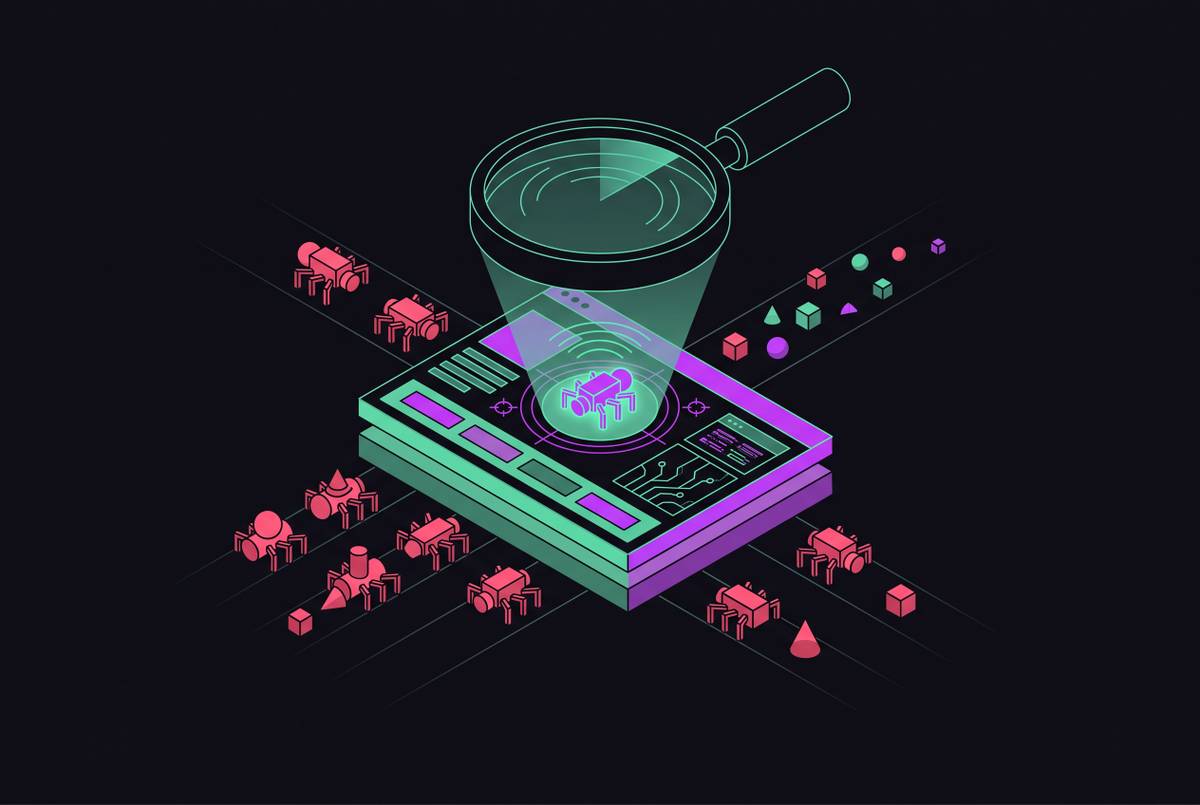
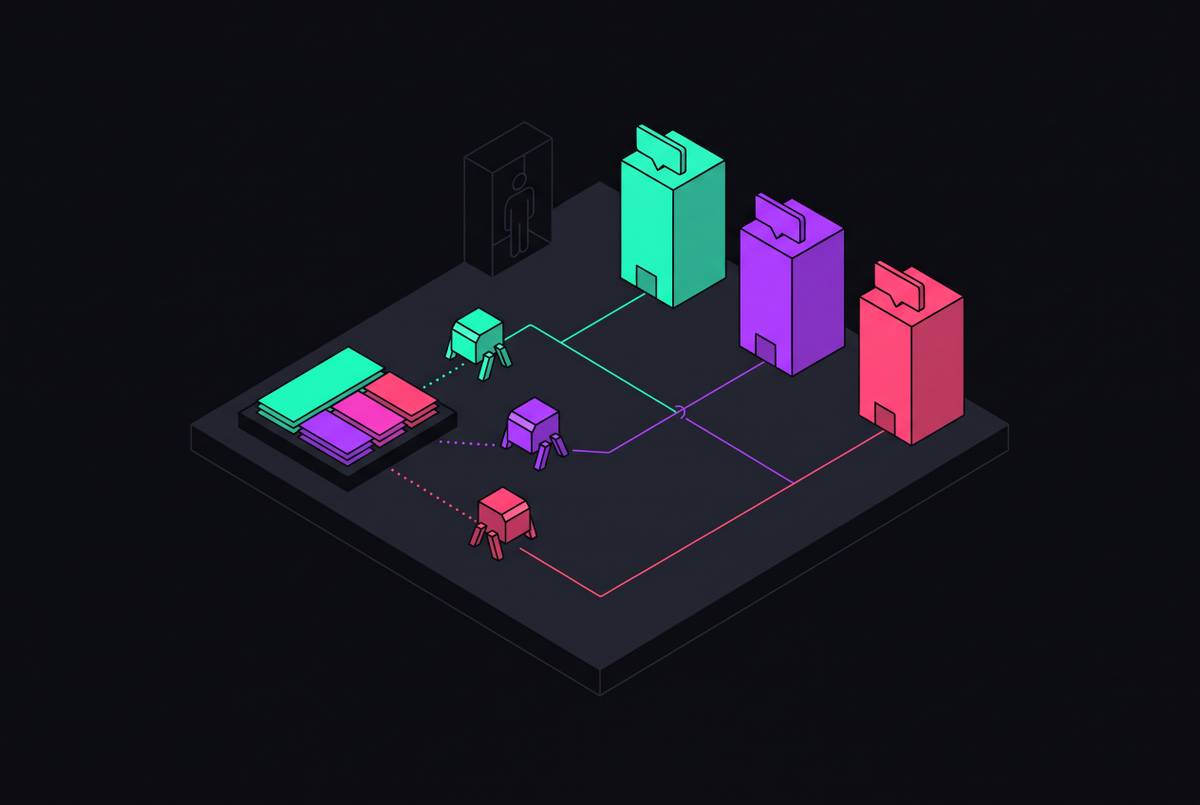
To detect AI agents on a website, use server logs for crawler requests, request-layer attribution for human referrals, and direct AI-query probing for citations that generate no visit. ChatGPT and Claude interact with sites in these three distinct modes, and standard analytics cannot observe all of them.
Why standard analytics and bot-detection tools were built for a world without AI agents
Standard analytics and bot-detection tools were built around a binary assumption. Non-human traffic was either a useful search crawler to let in or a malicious bot to block. Neither group was a likely buyer, so leaving automated activity out of reports seemed to fit with the need to understand what buyers wanted.
AI agents break that assumption because they can retrieve content on behalf of people actively researching a purchase. An agent’s request may serve a buyer’s investigation, so discarding it as noise removes a useful signal. This blind spot comes from how the tools are built, so adding a new analytics category alone cannot fix it.
The three structurally distinct ways ChatGPT and Claude interact with a website
The first mode is assistant referral, in which a human clicks a link inside a ChatGPT or Claude answer and starts a human session on the site. Its defining problem is attribution, because the session can arrive without the referrer information that would identify the assistant as its source.
The second mode is AI crawler retrieval, in which an automated agent fetches a page for indexing, training, or summarization. GPTBot, ClaudeBot, OAI-SearchBot, and Claude-SearchBot belong to this automated population. Their requests do not require a human browser session. The evidence is therefore in request records.
The third mode is AI citation presence, in which the site appears inside an answer without generating a visit. Nothing reaches the site at that moment. The three modes therefore differ both in what happened and in where evidence of it can exist.
How the referral attribution gap works and why GA4 defaults to "Direct"
When someone clicks a link inside a ChatGPT answer, the destination request can arrive without a Referer header. GA4 then reads an empty document.referrer and falls back to Direct/(none). A buyer who discovered the site through an assistant can therefore look like someone arriving through a bookmark.
The missing header reflects how the assistant’s interface delivers the link to the browser, which limits GA4 and other analytics products that depend on the same information. Plausible, Fathom, and Simple Analytics can show ChatGPT and Claude as distinct referrers when that information survives. With missing referrer information, they face the same Direct attribution problem.
Channel grouping creates a separate complication when ChatGPT delivers links through interfaces whose origin is not chat.openai.com. GA4’s default grouping may have no matching entry for that origin string. Missing source information and unrecognized source information are different failures, even though both weaken attribution. As a result, a meaningful share of Direct traffic may represent AI-referred buyers rather than visits with no discoverable external source.
Why AI crawlers are structurally invisible to client-side analytics
GPTBot, ClaudeBot, OAI-SearchBot, and Claude-SearchBot fetch raw HTML without executing client-side JavaScript. Google Analytics and tag-manager-based tracking therefore get no event from these requests. The tracking code never runs.
JavaScript-dependent sites can also fail in the opposite direction. A page built with React, Vue, or Angular may return an almost empty document before its scripts run, leaving the crawler with little content to read. Permission alone cannot make that document useful. Allowing a crawler through robots.txt does not resolve a rendering barrier.
Access policy also needs to distinguish training crawlers from search crawlers and user-triggered fetchers. GPTBot and ClaudeBot serve a different purpose from OAI-SearchBot and Claude-SearchBot, while blocking ChatGPT-User or Claude-User prevents retrieval for someone asking about a page mid-conversation. These are different decisions, not one AI-access switch. Google-Extended is different again, because it is a permission token for training or grounding rather than a visiting crawler, and normal Googlebot crawling is unaffected by that opt-out.
How can you tell if AI bots are crawling your website and what content they are reading?
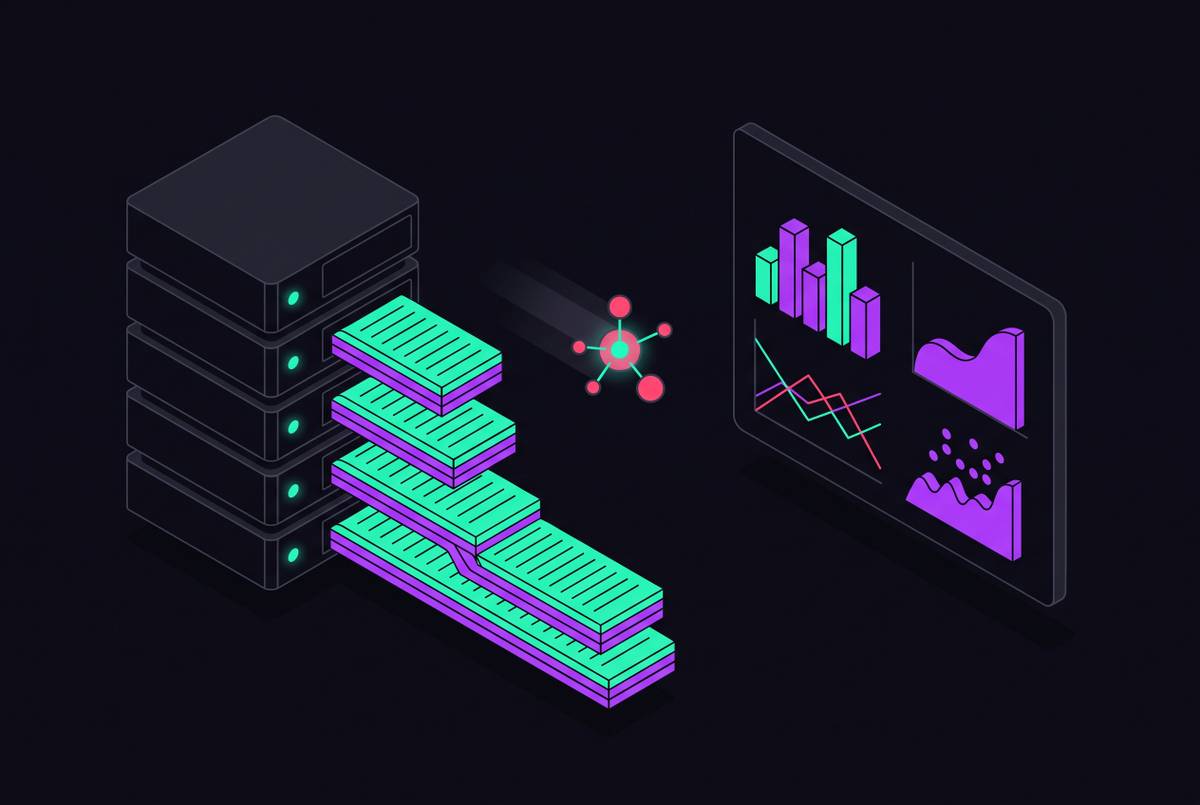
Server access logs record HTTP requests whether or not JavaScript executes. For a crawler request, they expose the user-agent string, exact URL, timestamp, and response code. Those fields answer a concrete set of questions. They show which pages were requested, when retrieval occurred, and what response the server returned, rather than leaving the visit outside the reporting system.
Filtering those records for known AI user-agent strings makes crawler activity inspectable. Relevant strings include GPTBot, ClaudeBot, OAI-SearchBot, ChatGPT-User, Claude-User, PerplexityBot, and Meta-ExternalAgent. The URL identifies the content requested, but a fetch alone does not establish that the content appeared in an answer.
Tools built to track crawlers and network-edge tools make this evidence easier to sort through. Options include xSeek, Cloudflare Bot Management, Fastly, and Akamai, with the practical evaluation centered on crawler identity, page access, frequency, and blocking. Access rules need their own scrutiny. A robots.txt permission can coexist with a firewall denial or challenge, so permission and successful retrieval cannot be treated as equivalent.
Fixing referral attribution through cryptographic signatures and what they recover
HTTP message signatures defined by a technical standard provide a way to authenticate signed information in an HTTP request. Where an AI-originated request includes such a signature, server-side verification can recover authenticated origin information that a missing referrer would otherwise conceal. That is a different evidence path. It works at the request layer rather than asking client-side analytics to reconstruct a header it never received.
A verification layer cannot recover signed attribution from an unsigned human browser request, so the mechanism should not be presented as a universal repair for every ChatGPT or Claude click. Its scope needs to remain explicit. Authenticating an agent’s request and attributing a subsequent human session are related goals, but they are not automatically the same event.
For teams handling signed requests, the action lies in server-side verification. The resulting origin evidence can support attribution where the request provides it. Identifying the person behind the visit requires a separate identity layer and a clear distinction between automated retrieval and human arrival.
Turning an identified human session from an AI referral into a person-level lead
Source attribution establishes where a session came from, while visitor identification asks who visited. Sales teams need the distinction because an assistant name is not a contact. Company-level identification finds an account through reverse IP lookup in an IP-to-organization database. That can be useful on high-traffic B2B sites, but remote work, VPN usage, and mobile networks weaken the association.
Person-level identification combines IP matching with first-party cookies, device signals, and identity graphs. It can return a name, title, email, and LinkedIn profile at a lower but actionable match rate on US B2B traffic. The outcome is more specific than an account signal. When paired with pages viewed, scroll depth, exit intent, and traffic source, it gives a rep a basis for prioritizing a contact.
Maverick keeps AI-agent reporting separate from human visitor identification and tracks what ChatGPT and Claude do and which content they access. That separation is a substantive methodological distinction. Teams can study what a crawler reads without mistaking it for a person who could become a sales lead.
Why match rates for visitor identification tools mislead when AI agents are not separated out
A visitor-identification rate is only useful when its population and outcome are defined. Human sessions, automated requests, company matches, and person matches are not interchangeable units. Blending them obscures what sales can actually use. In particular, identifying an organization or an AI agent does not establish that a named, contactable person has been identified.
Including bots in a denominator alone does not necessarily inflate a rate. A claim misleads when it groups different kinds of identification results together and reports them as human lead coverage. A company match may be a valid account signal even when it yields no contact. That distinction must survive the headline percentage.
The practical test for a vendor claim is therefore definitional. A team evaluating a rate should ask whether it separates humans from AI agents and other bots, distinguishes company-level from person-level matches, and specifies geography. Geography changes the scope of the claim. A person-level rate for US traffic cannot stand in for global coverage without overstating what the published measure establishes.
The citation mode: detecting AI presence that never generates a visit
Citation presence leaves no inbound request when the answer names or describes the site without fetching it or sending a visitor. Analytics, server logs, CDN bot managers, and visitor-identification tools have nothing to record. This is not another attribution failure. The event occurs in the assistant’s answer, outside the website’s own observation points.
Detection therefore requires active probing of ChatGPT, Claude, Perplexity, and Gemini with questions a prospective buyer would plausibly ask. The record needs to capture whether the site appears as a cited source, its prominence, and how those observations change over time. This measures the answers being tested. It should not be mistaken for a complete account of every answer those systems give.
Citation monitoring remains an emerging discipline, but it connects directly to crawler access and readable content. Server-side rendering can make a page available without requiring JavaScript execution, while structured data and llms.txt are additional considerations in the site’s AI-facing presentation. None establishes that a citation occurred.
Access consequences also differ by crawler. OpenAI’s documentation states that sites opted out of OAI-SearchBot will not be shown in ChatGPT search answers. Anthropic describes blocking Claude-SearchBot as something that may reduce visibility and accuracy in user search results. The distinction prevents an access diagnosis from becoming a broader claim than the stated policy supports.
A detection stack that covers all three modes without conflating them
The referral layer preserves available source information and verifies HTTP message signatures where signed requests provide recoverable origin evidence. Human identification follows only for human sessions. Its output should be kept separate from both crawler identities and company-only account signals.
The crawler layer uses server logs or tracking built for crawlers to show which URLs were requested, how often, what responses came back, and which rules limit access. Robots.txt and firewall rules belong in the same investigation because either can interrupt retrieval by search crawlers. The citation layer asks a different question. Periodic buyer-intent queries reveal whether readable, accessible content actually appears in the tested AI answers.
A blocked OAI-SearchBot request has a direct consequence for ChatGPT search visibility, while a human visit assigned to Direct raises an attribution problem instead. Neither can be resolved by counting citations alone. The operational principle is to classify the interaction first, then use the evidence source capable of observing it.