Why Standard Bot Filtering Destroys the AI Agent Signal You Actually Need
User-agent blocklists erase buyer research; behavioral classification can preserve it.
To detect AI agents on a website, teams need to supplement user-agent blocklists with session-level behavioral classification. Standard bot filtering can erase a buyer’s delegated research before identification and attribution begin. Preserving that signal requires distinguishing training crawlers, AI search agents, user-triggered browsing agents, and malicious scrapers, then routing commercially useful sessions into the go-to-market stack.
Why the standard bot-filtering toolkit was designed for a world that no longer exists
Search crawlers such as Googlebot and Bingbot operated within a recognizable exchange. They identified themselves, followed robots.txt rules, and sent traffic back to the sites they indexed. UA blocklists, IAB/ABC filters, and robots.txt rules served different functions, but their usefulness depended on knowing which automated visitors were arriving and how they would behave.
That population is no longer a coherent category. Training crawlers bulk-collect content, AI search crawlers index it for retrieval and citation, and user-triggered browsing agents act on a specific person’s behalf in real time. All three are automated, but automation says little about their purpose. A rule that treats them alike discards the distinction between collecting material for a model and researching a purchase for a buyer.
Meanwhile, robots.txt remains a voluntary protocol. A crawler that ignores a Disallow rule faces no enforcement from that rule itself. Blanket restrictions therefore depend on cooperation from the visitors they address, while UA filtering depends on reliable declarations of identity. Those assumptions cannot resolve the more difficult case of a browser acting purposefully for a person without identifying itself as an agent.
What the new wave of AI browsing agents actually looks like in a web session
AI browsing agents operate through real browsers and perform multi-step tasks that people ordinarily complete themselves. Flight booking, online shopping, and forum interaction are examples. FP-Agent research from UC Davis describes these agents as capable of autonomously navigating websites and examines them while performing realistic tasks. Their browser environment is not necessarily what separates them from human visitors.
Session structure provides a more useful distinction. Navigation sequences that repeat closely, retries, and lots of activity in a short time can point to automation, even when the browser looks ordinary. Microsoft Copilot Actions, for example, may appear as Edge/Chromium browsing in protocol and TLS, without a simple bot UA to target. Headers alone therefore leave the classifier without enough evidence to distinguish an agent from the person it serves.
The commercial interpretation depends on the task being performed. An agent moving through product information toward a purchase is not equivalent to a scraper collecting pages indiscriminately. Yet purposeful browsing can resemble a focused human researcher, while consistent execution can trigger suspicion. The same session can look human at the browser layer and automated at the behavioral layer.
DataDome’s AI Traffic Report found that Meta-ExternalAgent was the most impersonated agent across the first two months of 2026. The report also recorded 7.9 million spoofed ChatGPT-User requests and found that PerplexityBot had the highest impersonation rate among the agents tracked. A recognizable name is not proof of origin. A UA-based rule can consequently apply the same treatment to a legitimate agent and a malicious requester impersonating it.
How blunt filtering silently erases the visitor identity layer before it can form
Visitor identification needs a session to reach the measurement stack. Anonymous behavior and session patterns form its base, company-level reverse-IP resolution provides another layer, and person-level identity can add a name, title, email, and LinkedIn profile. If a session is suppressed before the identification pixel fires, it cannot send the event that starts that process.
This failure starts upstream of the sales workflow. A purchasing agent may visit pricing, implementation, and case study pages in a purposeful sequence. If a blunt heuristic rejects that sequence as suspiciously consistent, the identification layer loses the behavior that would have made the visit commercially useful. The filter has removed more than an automated request. It has removed the basis for interpreting an evaluation journey.
Analytics filtering creates a related completeness problem. GA4’s known-bot filter uses the IAB/ABC list, which does not cover every new AI crawler or custom-built agent. Some automated sessions disappear while others remain. The resulting dataset is neither a complete record of automated interest nor a reliably human-only audience, so its composition cannot be inferred from the presence of a bot filter.
HubSpot’s native tracking is reactive, crediting a source once a visitor identifies themselves through a form or chatbot. AI-agent-driven research and pricing-page visits can therefore remain invisible to that attribution process. Paid media that drove an agent to a pricing page cannot receive the intended credit when the linking event is absent, and the closed-won feedback loop to ad platforms as an offline conversion never fires. Standard reports do not reveal the commercial journey that suppression prevented them from recording.
Why the long tail of unregistered and spoofed agents makes the coverage gap worse over time
A registry describes only the agents it recognizes. Cloudflare’s directory catalogues 95 AI bots as of October 2026, of which 67 send an identifiable user-agent string. Bytespider illustrates the gap between registration and activity. It appears in AI-bot traffic data while remaining absent from the verified registry, so registry membership cannot define the population that needs classification.
As new models launch and companies rebrand their bots, the roster changes monthly, and a blocklist accurate in one quarter can be materially stale by the next. Growing traffic from agents outside the top tracked names widens that gap without any change to a site’s settings. Maintaining the list addresses age, but not completeness.
Spoofing also undermines entries that are current. An allowlist can admit a malicious requester presenting a trusted name, while a blocklist can suppress the legitimate agent using that same name. Neither outcome is repaired by adding more names. No single authoritative source covers the full population, and disagreement between registries and observed traffic is evidence of that limitation rather than a reason to choose whichever list looks tidiest.
How can a team detect AI agents on its website without destroying the signal?
Behavioral fingerprinting classifies how a session unfolds. Relevant signals include typing cadence, scroll behavior, click timing, mouse behavior, and navigation sequence. FP-Agent tested seven AI browsing agents performing realistic web tasks and found that browser fingerprints alone offered limited discriminative power. Behavioral fingerprints, by contrast, separated the agents from humans and from one another.
The study’s case comparison makes the distinction concrete. FP-Agent detected all seven agents, but the bot detection Cloudflare had deployed detected only one. This was a controlled research result.
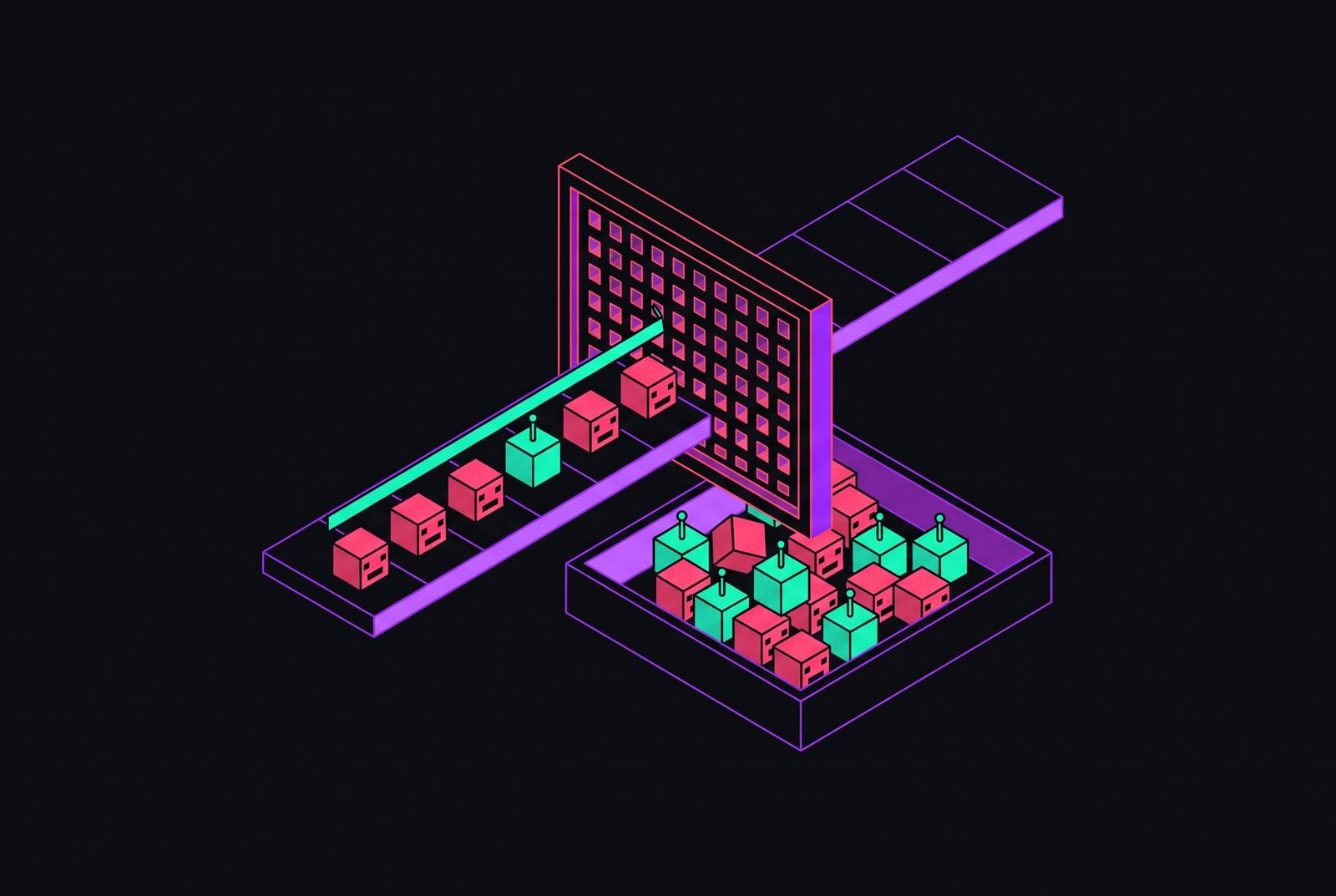
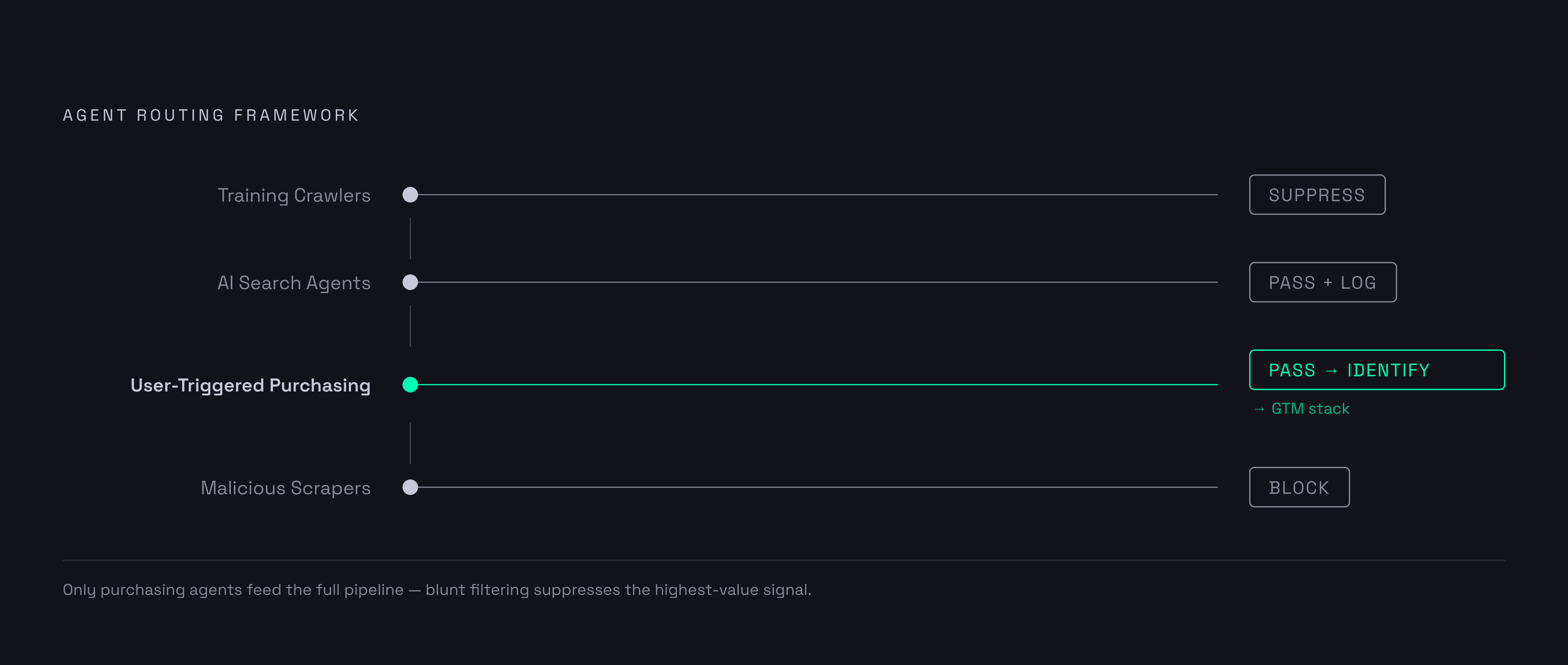
For commercial use, detection must also distinguish purposes. Training crawlers, AI search agents, user-triggered browsing agents, and malicious scrapers need to be handled differently because they do different things. The recommended posture is to pass user-triggered and AI search agents into the identification layer while suppressing training crawlers and malicious scrapers.
Endpoint targeting adds context to behavioral evidence. DataDome’s 2026 State of Bot & Agent Security Report recorded 605.6 million AI-agent requests to high-risk endpoints, including login pages, account creation, and payment flows, in H1 2026. A research session moving through pricing and case study pages has a different structure. The endpoints a session visits help show what it is trying to do, though behavioral classification is still needed.
The useful approach combines these layers. Declared identity and robots.txt compliance provide first-pass hints, behavioral fingerprints provide the primary classifier, and endpoint selection and navigation sequence provide intent signals. No single layer is sufficient alone.
What a go-to-market team needs from AI agent detection that a security tool is not designed to provide
Security tools and go-to-market teams have different objectives. Correctly identifying and blocking or logging an agent may satisfy a security workflow, but a revenue workflow needs the classified session to reach identification and attribution systems. It also needs evidence about the operator and the content consumed. A detection result left inside a security dashboard does not supply that commercial record.
The relevant questions extend beyond whether a visitor was automated. A team needs to establish who sent the agent, what it researched, and whether the journey represents an active evaluation. Pricing, implementation documentation, and case study visits in sequence can indicate purposeful product research.
A single detection ping leaves most of that context unresolved. Like a company-level IP lookup for human traffic, it can establish presence without explaining who was involved or why they visited. Pages viewed, scroll depth, content consumed, and how often the visitor returns show more of the event journey. Keeping those signals lets the team receive the session’s context along with its classification label.
The structural requirement is integration with the revenue workflow. CRM write-back, ad platform connectors, and webhook delivery move the session into the systems where teams assess accounts and allocate spend. Those connections cannot bring back visits that were already suppressed upstream. Nor does successful agent classification alone establish the buyer’s identity, so detection and identification need to be evaluated as separate capabilities within the same pipeline.
How to audit whether your current stack is destroying the signal you need
A team can start by comparing the raw count of server-side sessions with the count at the analytics layer. The gap is the starting population for investigating suppression before identification. Segment those sessions by UA string, IP behavior, and navigation pattern to distinguish likely AI-agent profiles from clear malicious scrapers.
Compare blocked UA strings with current Cloudflare Radar traffic data and find agents whose sessions are all blocked, whatever they are trying to do. Then check whether sessions using known agent names come from verified operators or spoofed requests. A current name alone is insufficient evidence. Without behavioral verification, the stack may reject legitimate agents while admitting impersonators.
Start the downstream audit with agent sessions that did get through. Check whether each visit reaches the CRM with its traffic source, ad platform attribution, and content journey. A dashboard count is not a completed handoff. The functional requirement includes account-level attribution, CRM write-back, ad-level connectors, and the ability to return engagement as offline conversions, so a missing connection identifies where a preserved session becomes commercially unusable.
Before rebuilding filters, decide how to handle each kind of legitimate agent. Training crawlers should be suppressed, AI search agents should pass and be logged, and user-triggered purchasing agents should pass into operator identification and the go-to-market stack. Malicious scrapers should be blocked from entering the commercial workflow.
Finally, check match-rate as closely as for human visitor identification. Treat every vendor’s AI-agent detection claim as a marketing assertion until it has been tested on the team’s own traffic. Check whether classified sessions include the operator, content journey, and intent signals the team needs to act. An AI-agent flag is not an actionable match.